The ranking that stopped meaning anything
Generative engine optimization (GEO) is the practice of structuring content so that AI-powered search systems retrieve it, synthesize it, and cite it when generating answers. Those systems include Google AI Overviews, ChatGPT, and Perplexity. GEO doesn’t replace SEO. Instead, GEO extends SEO into an environment where the answer is the main result, not the link.
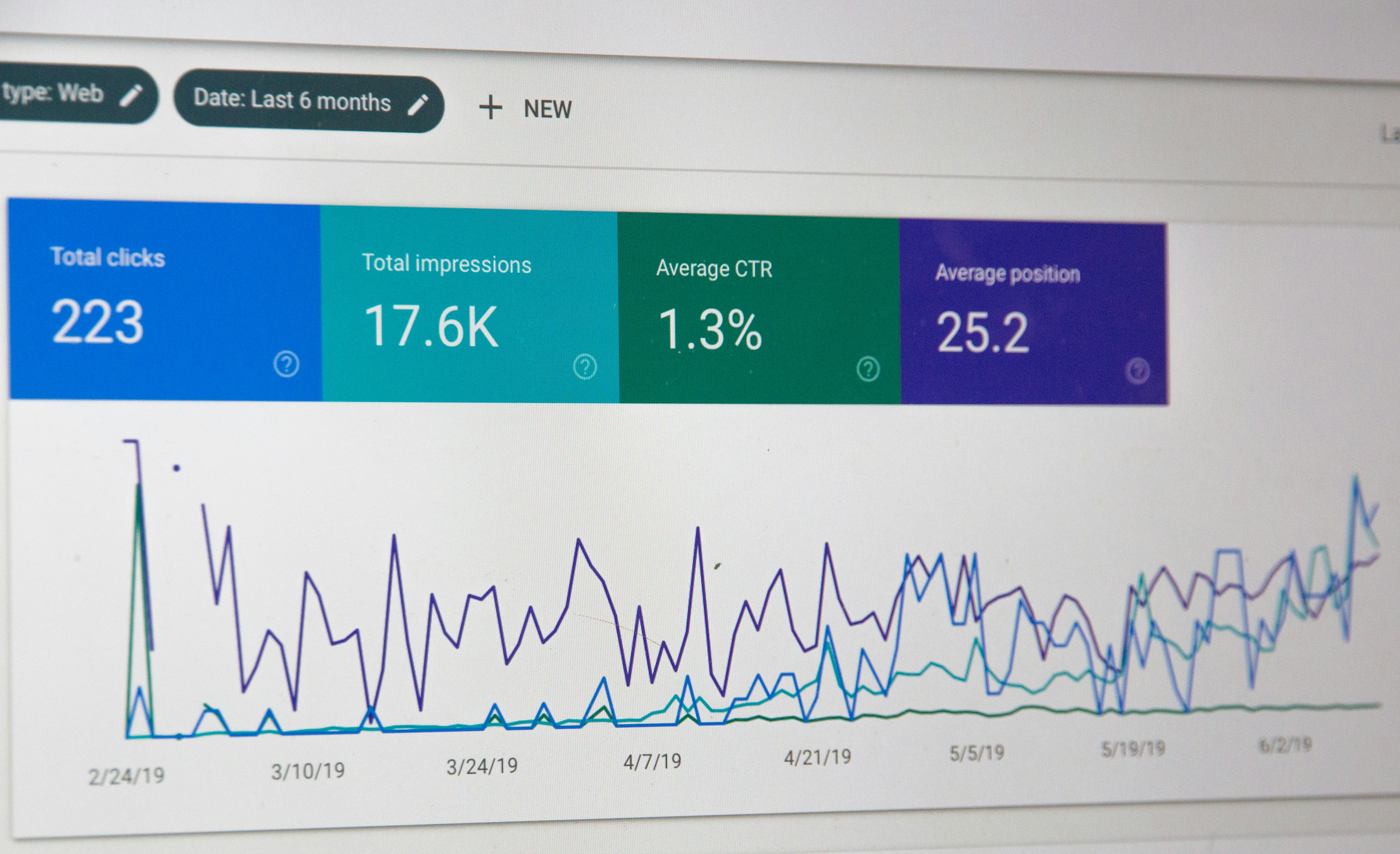
Imagine checking your search dashboard and seeing exactly what you worked for: position one, month after month, for a query that matters to your business. In other words, you targeted the right keyword, the page is strong, and the ranking held.
But the clicks didn’t.
You pull up the actual results page and find a paragraph you did not write sitting above your listing: it’s an AI-generated summary, a synthesis drawn from three different sources, each one cited at the bottom of the answer box, and none of them is you. The user reads the summary, gets what they came for, and never scrolls down to the blue links at all.
This is why 58% of first-ranked pages now see lower CTR when AI overviews appear.
The data underneath the shift
The Pew Research Center studied nearly 70,000 Google searches from 900 users in March 2025 and found that when an AI summary appeared on the results page, users clicked on a traditional search result only 8% of the time. That is roughly half the 15% click rate on pages without one.
In parallel, an Ahrefs study of 300,000 keywords, published in February 2026, found that the presence of an AI Overview was associated with a 58% lower average click-through rate for the first-ranked page. While the ranking held, the mechanism that converted rankings into traffic didn’t.
This is a shift that cannot be fixed by writing more content or building more links. It requires understanding what AI systems are actually looking for, and why most content was never built to provide it. The businesses that began asking this question early, the ones that recognized search as something more demanding than a keyword game, are the ones positioned to answer it now.
Why traditional SEO rankings no longer guarantee traffic
For two decades, search worked on an implicit contract. A business earned a high ranking by producing useful content, building credible links, and demonstrating expertise on a topic, and, in return, Google sent traffic. The better the ranking, the more clicks.
That contract is breaking.
In February 2024, Gartner predicted that traditional search engine volume would drop 25% by 2026, with search marketing losing share to AI chatbots and other virtual agents.
Alan Antin, VP and analyst at Gartner, described generative AI tools as “substitute answer engines, replacing user queries that previously may have been executed in traditional search engines”. The prediction was aggressive when it was made, but this year shows that the data suggested was directionally right.
What the behavioral data shows
Pew’s research found that 26% of users ended their browsing session entirely after encountering an AI summary, compared to 16% on traditional results pages. The AI answered their question well enough that they stopped searching.
For websites users never visited, the distinction between “the user found what they needed” and “we lost the traffic” is the same outcome experienced from opposite directions.
Question-based searches triggered AI summaries 60% of the time, while full sentence queries triggered them 36% of the time. The longer and more conversational the query, the more likely the user would never see a traditional results page at all.
From guidelines to gatekeeping criteria
This isn’t a crisis narrative as search isn’t dying. But the mechanism that connects quality content to qualified traffic is being rebuilt around AI intermediation.
Google’s own helpful content documentation frames the shift explicitly: content should be created “primarily for people, not to manipulate search engine rankings”. The systems reward originality, clear sourcing, demonstrable expertise, and trust. These aren’t new requirements. However, the latest updates show that AI systems have turned them from guidelines into gatekeeping criteria.
Content that doesn’t meet them is not merely ranked lower, but is excluded from the AI answer entirely.
Seer Interactive’s 2026 study of 53 brands across 2.43 billion organic impressions tracked AI Overview click-through rates from January 2025 through February 2026. Organic CTR on AI Overview queries fell as low as 1.3% in December 2025 before rebounding to 2.4% by February 2026. Despite the steep period being over, the old click-through rates aren’t coming back.
The question every content strategy now faces isn’t whether search traffic is declining but whether the content a business produces is structured, sourced, and credible enough to be cited by the systems that are replacing the click.
This is the shift from SEO as a keyword discipline to SEO as a trust discipline, and it’s the foundation GEO is built on.
The 5 tactics that increase AI citations (backed by peer-reviewed data)
If GEO is about being cited, the question becomes: what makes content citable?
The most rigorous answer comes from a peer-reviewed study published at KDD 2024 by researchers from multiple universities, which tested nine content optimization tactics across 10,000 search queries and measured how each one changed visibility inside generative engine responses.
The study was validated on Perplexity.ai with real-world results confirming the laboratory findings.
The findings were specific:
Content tactic tested | Visibility change |
|---|---|
Expert quotations added | +41% |
Statistics added | +32% |
Source citations added | +30% |
Fluency and readability improved | +15% to 30% |
Keyword stuffing | -10% |
These aren’t marginal effects, as they are the difference between being quoted and being ignored.
The tactic that defined a generation of search optimization, keyword stuffing, actively made content less likely to be cited by AI systems. The generative engine rewards precision, attribution, and verifiable claims.
From extraction to synthesis: AEO and GEO
This connects to a parallel discipline that predates generative AI by years: Answer Engine Optimization, or AEO.
AEO originally focused on structuring content for featured snippets, voice assistants, and the extractive answer boxes that sit above traditional search results. It was built around a simple principle: answer first, clearly and concisely, and the engine will surface it.
GEO extends that principle into a more demanding environment. Where AEO optimizes for extraction (a single answer pulled from a single page), GEO optimizes for synthesis. As AI systems compose new prose from multiple cited sources, they need content that isn’t only answerable but also attributable.
The question-shaped heading and the concise first paragraph still matter. But so does the quality of the sourcing, the clarity of the claims, and whether the content carries enough original analysis that an AI system would trust it enough to cite.
Google’s helpful content guidance asks whether content provides “original information, reporting, research, or analysis” and whether it offers “insightful analysis or interesting information that is beyond the obvious”. These are the editorial standards GEO operationalizes into measurable outcomes.
GEO and AEO aren’t competing frameworks. While AEO is the editorial layer(direct answers, clean structure, extractable claims), GEO is the strategic frame(authority, provenance, and trust that earns citation across AI systems). Together, they describe what the businesses that rank best have always done instinctively: teach generously, source carefully, and answer the question before explaining why the answer matters.
How content is selected and structured for AI systems, one of our next pieces, will examine the technical architecture behind that selection process.
AI systems don't reward repetition. They reward precision, attribution, and verifiable claims.
Trust as infrastructure
GEO isn’t a formatting trick, nor is it a schema markup applied to mediocre content or a checklist that can be bolted onto a page that was built primarily to capture a keyword.
Where citations concentrate
The Pew Research Center’s analysis of AI Overview citations found that 88% of AI summaries cited more than three sources and that the domains most frequently cited were Wikipedia, YouTube, Reddit, and government sites, which appeared in 6% of AI summary links compared to just 2% in standard results.
AI systems are not pulling from a random selection of indexed pages. They are concentrating citations on domains they can verify and trust.
Trust is the variable that holds the weight
Google’s own framework makes this explicit. In its helpful content documentation, Google states that trust is the most important of the four E‑E‑A‑T signals: experience, expertise, authoritativeness, and trustworthiness. The others contribute to trust, but trust is the variable that holds the weight.
Content created primarily to attract search engine visits, Google warns, is “not aligned with what our systems seek to reward”.
Citation helps, but doesn't restore
Seer Interactive’s 2026 analysis of 53 brands across 2.43 billion organic impressions found that pages cited in AI Overviews received 120% more clicks per impression than uncited pages on the same results page. Being cited is a material advantage. But cited pages still trail pages on results without AI Overviews by 38%.
A citation is better than being left out, as it's not a return to what the old search contract delivered.
The rules didn't change. They were enforced.
This is the deeper argument underneath GEO. The discipline rewards the qualities that SEO always should have rewarded: topical depth, original research, named expertise, and editorial credibility. The difference is that the mechanism is now explicit.
The businesses that invested in genuine authority rather than keyword arbitrage are discovering that GEO did not change the rules. It enforced them.
The psychology of why people ignore most marketing runs on the same principle. Humans filter content based on trust signals: familiarity, credibility, and the sense that the source has earned the right to speak. AI systems are modeling the same filters at scale. The content that survives both filters is content built on something real, including sustained expertise, honest sourcing, and the kind of editorial depth that cannot be manufactured in a sprint.
A future blog, namely "How topical authority is replacing keyword strategy in modern search", will examine how that depth compounds into the structural advantage search engines now recognize as authority.
Content that earns the citation
Going back to the dashboard. Remember position one, but clicks are failing? The AI Overview sits where the traffic used to be.
The marketer looking at that screen has two options. The first one is to produce more content at the same level, more pages, more keywords, more volume, and hope that scale compensates for compression. The data from every study cited in this piece suggests it won’t.
The second option is to build content that the AI system would want to cite. Content with named sources and specific data that answers the question in the first paragraph rather than the fifth.
To conclude, the better choice is to build content with claims that stand alone clearly enough for an AI to extract and attribute. As we showcased in the shift from content creation to content thinking, the recognition that what a business publishes isn’t a production function but a strategic asset.
This isn’t a small adjustment, as it requires rethinking what content is for. While a blog post optimized for a keyword is built to capture a query, a knowledge asset optimized for citation is built to answer a question so well that an AI system trusts it enough to quote.
This distinction separates writing for an algorithm from writing for a reader whose judgment an algorithm is trying to simulate.
At Mediasphere, we work with businesses navigating this exact transition: organizations that understand the rules of search have changed and that the content built for the previous era needs to be rethought for the one arriving now.
GEO and AEO are the operational expression of a principle this blog has explored from its first post: that marketing works when it earns attention through depth, credibility, and the willingness to say something worth citing.
If that principle describes how you think about your own content, let’s talk!
Mediasphere is a strategic content marketing agency that explores why marketing works. To learn more, visit mediasphere.digital
The Mediasphere Hot Take
We think GEO is being sold as a new discipline when it is mostly an old standard finally being enforced. Systems that synthesize answers need content they can verify, attribute, and quote. That was always what good content looked like. Here is what we would do:
- Rewrite your five most important pages so each carries at least three standalone, attributable claims. A claim spread across three sentences cannot be cited.
- Name your sources in the prose, with the year. AI systems verify what they can trace.
- Answer the title's question in the first hundred words, every time. The businesses winning citations are not gaming a new system. They were already writing things worth quoting, and the machines finally caught up.